People we’ve helped exonerate
Scott Minton
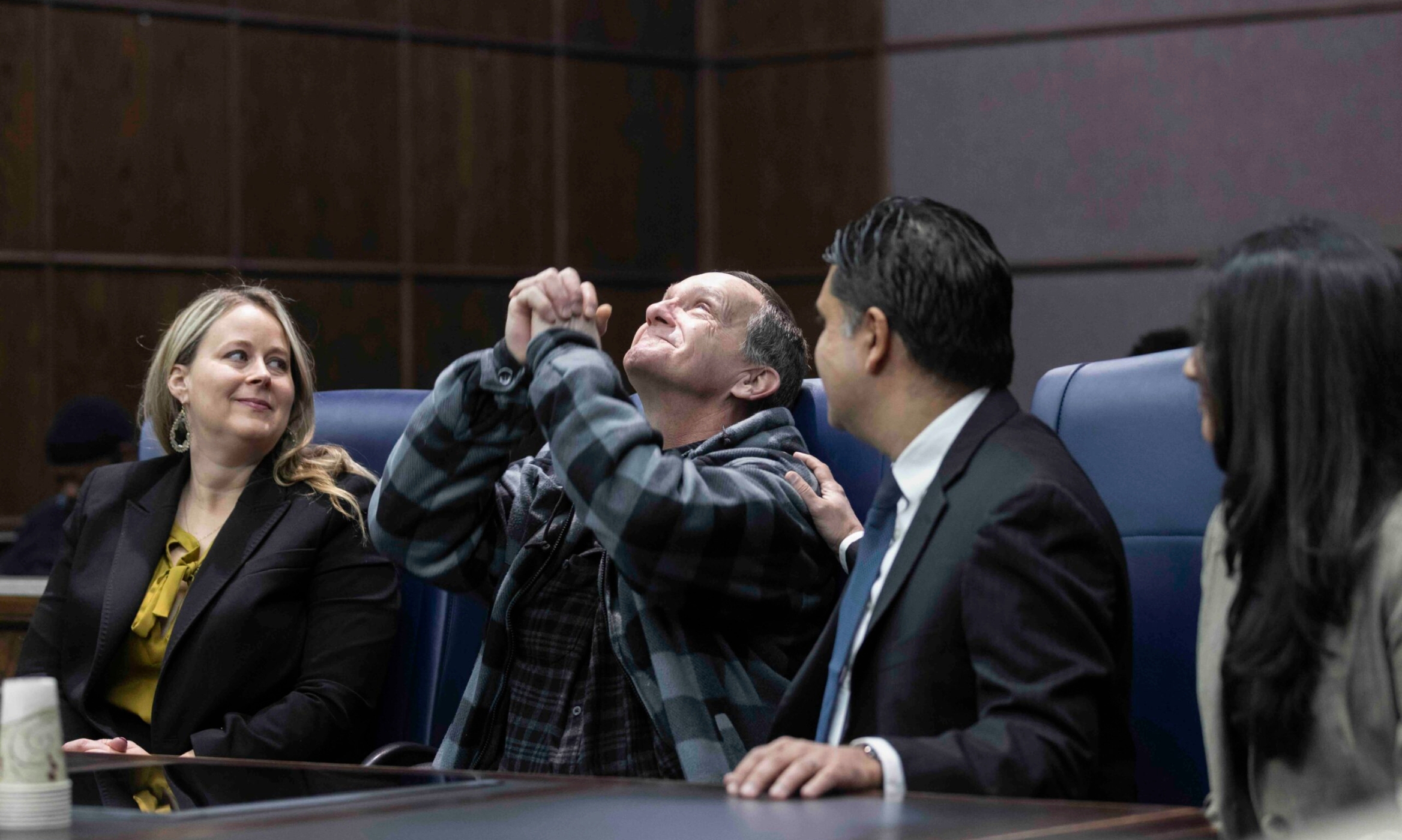
Scott Minton was released from prison on December 18, 2024, after serving 31 years for a crime he didn’t commit.
Case history
On the morning of October 31, 1993, a woman in Cleveland, Tennessee reported that she had been robbed, assaulted, and sexually terrorized by two young white people while a third ransacked her home. The same morning, Scott — then 20 years old — was in Dayton, a town in the next county over, working on his Camaro with a friend. He made multiple stops that morning for parts and gas, accumulating time-stamped receipts from the local auto parts store. A store clerk knew him by face and confirmed he had been there. More than a dozen friends and family members could account for his whereabouts. Getting from Dayton to the crime scene required crossing the Tennessee River by ferry — a journey of at least an hour.
None of it mattered. A few hours after the reported crime, police in Rhea County showed up at Scott’s home asking about his friend Shannon Blaylock, who had once been a foster child of the victim. Scott and Blaylock were taken in for questioning. Scott cooperated fully. When he was returned home after a late-night search of his trailer turned up nothing, he was told by officers what the crime looked like in detail — information that would reappear, almost verbatim, in a confession bearing his name.
Two days later, Scott was transported back to Bradley County in a patrol car traveling 95 miles per hour, officers cursing at him and demanding he confess. He was held in isolation, denied his request for an attorney, and told to simply incorporate everything the detectives had described into a statement and they would let him go. Scott, who could not read, signed a waiver he didn’t understand and eventually broke down. The confession contained details he had been fed, not facts he knew.
On March 31, 1994, a jury convicted Scott Minton on multiple counts including aggravated rape, aggravated robbery, and aggravated burglary. He was sentenced to 76 years in prison. There was no physical evidence connecting him to the crime. The eyewitness identification was contradicted by her own initial description, which didn’t match Scott. And 18 people — witnesses, clerks, friends, and family — could place him somewhere else entirely.
Law enforcement's tunnel vision led them to pressure a vulnerable man into confessing to a crime he could not have done — a fact corroborated by a staggering 18 alibi witnesses. We are thrilled Mr. Minton is finally free, but he should have never been convicted in the first place.
Adnan Sultan Senior Staff Attorney, The Innocence Project
Building the case for innocence
In 2019, Tennessee Innocence Project and the Innocence Project began representing Scott Minton. On March 2, 2023, TIP attorneys Jessica Van Dyke, Madison Lowery, and investigator Marc Caudel, alongside their Innocence Project partners, filed a motion for post-conviction relief and a separate petition for a writ of error coram nobis, building a case on multiple interlocking fronts.
DNA testing of crime scene evidence excluded Scott as a contributor to genetic material and the physical evidence from the scene pointed away from him.
The team retained two expert witnesses whose reports went to the heart of how Scott had been convicted. Dr. Nancy Franklin, an expert in eyewitness misidentification, documented how the alleged victim’s account had shifted significantly over time, and her initial description of the male assailant as a man over six feet tall with a mullet, bore no resemblance to Scott. Franklin found that her failure to select Scott from the first photo array carried significant diagnostic weight, and that her later identification at a live lineup was likely contaminated by that prior exposure and shaped by the detectives conducting it. Dr. Brian Cutler, an expert in false confessions, detailed how Scott’s interrogation contained nearly every factor known to produce false self-incrimination, maximization of the alleged offense, minimization of consequences, cognitive vulnerability, and the wholesale spoon-feeding of crime details that then appeared in the confession.
A police procedures expert, reviewing the full investigation, called it “one of the worst I’ve seen.” Detectives had failed to fingerprint the scene, never had the rape kit analyzed, dismissed Minton’s independent alibi witnesses without investigation, and never sought out ferry workers who would have seen Minton and his companions crossing the river if they had actually made the trip to Bradley County that morning.
A three-day evidentiary hearing was held in October 2024 before Judge Amanda Dunn. Alibi witnesses testified again. Angela Manning, Scott’s co-defendant, who had been released from prison in 2018, testified that she too had been pressured into a false confession. Three of the alleged victim’s own children testified about their mother’s history of dishonesty and financial deception. A firearms expert raised questions about the physical evidence that contradicted the alleged victim’s own account of events. A gynecologist who reviewed the medical records noted that none of the injuries documented were consistent with the assault as described.
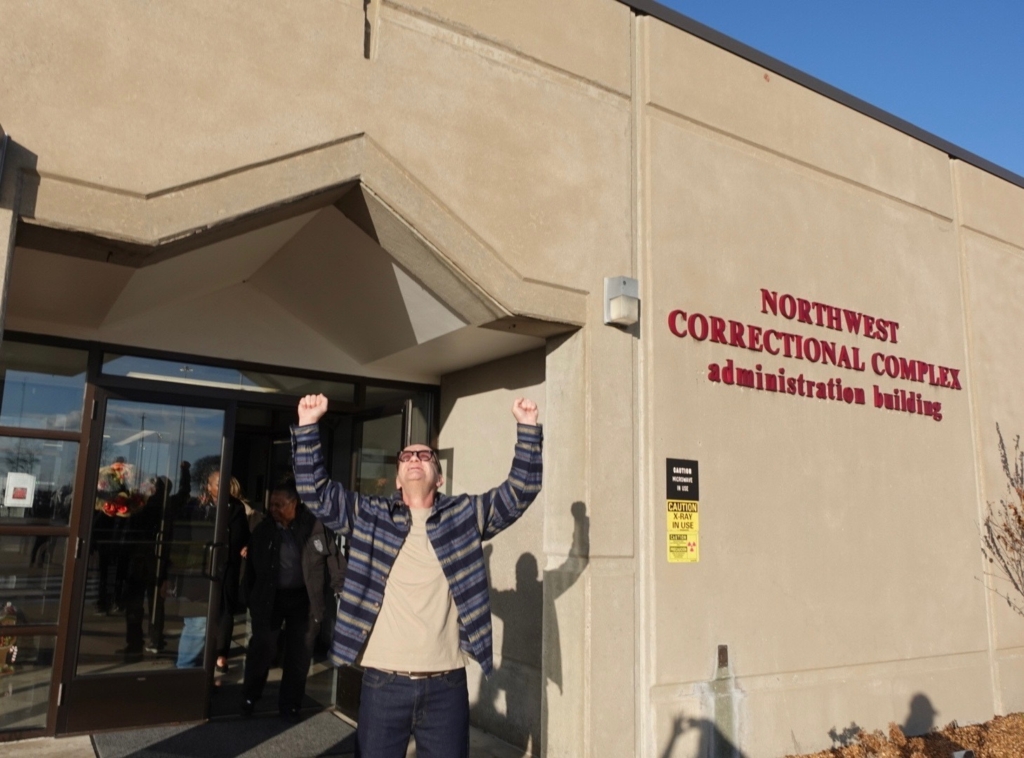
Image Credit: The Innocence Project
Exoneration
On December 10, 2024, Judge Dunn vacated Scott’s conviction. The flawed photo array, she found, should never have included him — his only connection to the reported crime was his friendship with Blaylock, and his appearance didn’t match the victim’s own initial description. That contaminated viewing made a later live lineup identification unreliable. And the confession, the judge wrote, was tainted because “the officers essentially provided many of the details of the attack on Ms. Watson and Petitioner simply agreed that those were the facts.”
In a separate order the same day, addressing the broader question of whether a crime had even occurred, the judge wrote: “It is unclear if a crime occurred, but it is abundantly clear that Mr. Minton had absolutely nothing to do with the events in Bradley County on October 31, 1993.”
Scott was released from prison on December 18, 2024. On January 23, 2025, the state dismissed all charges. He had spent 31 years in prison for a crime the evidence said he couldn’t have committed — and 18 people had said so from the beginning.
See more exonerees


Links & Resources
We are fighting every day to correct these injustices
—but we can’t do it alone.