Active Cases
Thomas Clardy
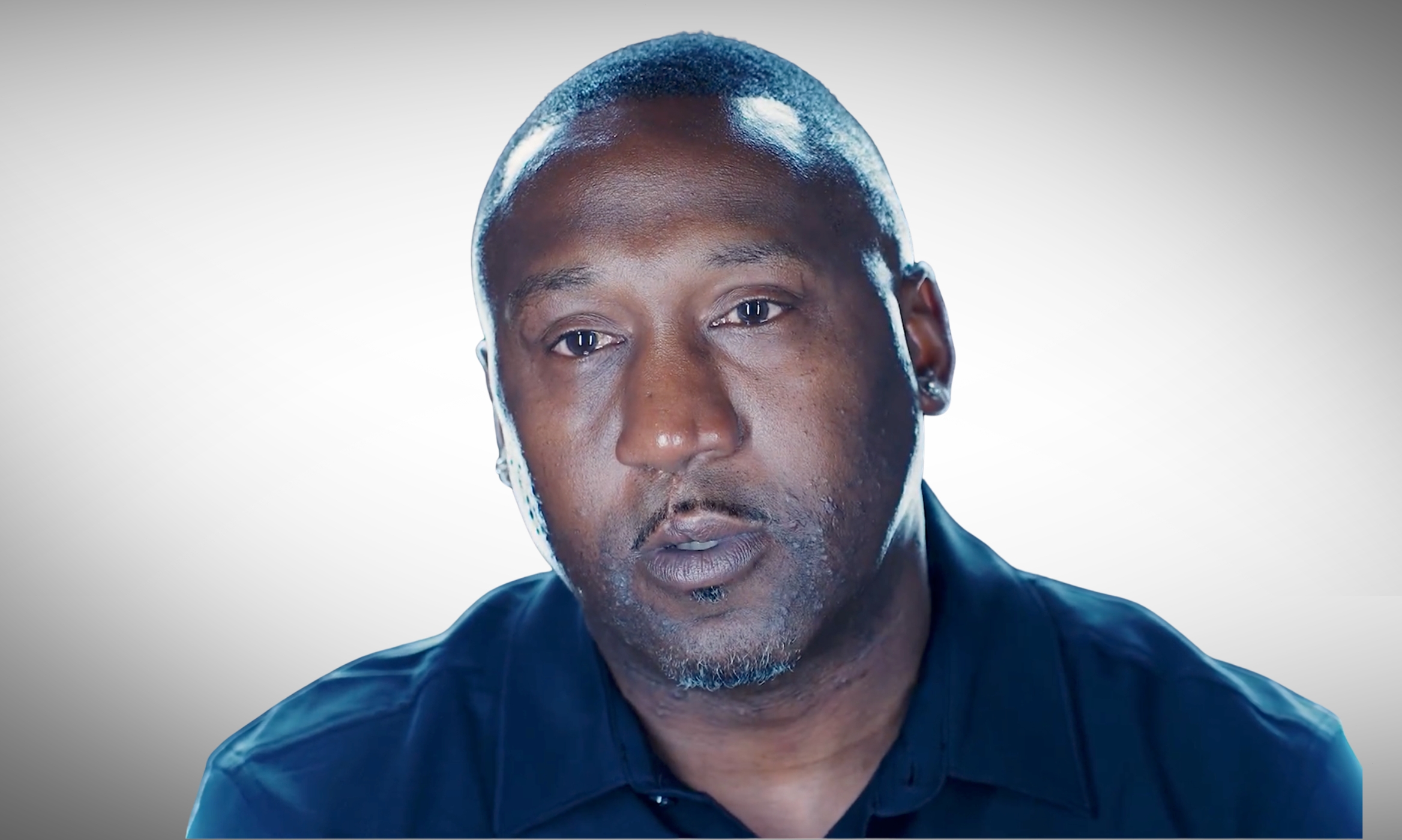
Thomas Clardy has served almost 20 years, convicted of a triple shooting at an auto body shop in Madison, Tennessee, a crime he did not commit.
Thomas grew up in North Nashville, a football player who became a star running back for the Pearl-Cohn Firebirds and helped clinch the 1997 state championship. Coaches still talk about #22, not just for his speed, but because he always doubled back to lift a fallen teammate off the turf. He has two sons. Thomas Jr. was just weeks old when his father was arrested. Jamari, now 25, grew up on scratchy prison phone calls instead of bedtime stories.
Thomas served 17 years in prison before a federal District Court overturned his conviction. When a federal judge overturned Thomas’s conviction in 2023, he walked out of Riverbend Maximum Security and spent 22 months trying to rebuild what had been taken, coaching middle school students, volunteering at food drives, showing up for his church, his community, and his family. Then Thomas heard the unthinkable. Another court reinstated the conviction and he was sent back to prison.
Thomas is back at Riverbend. TIP is still fighting.
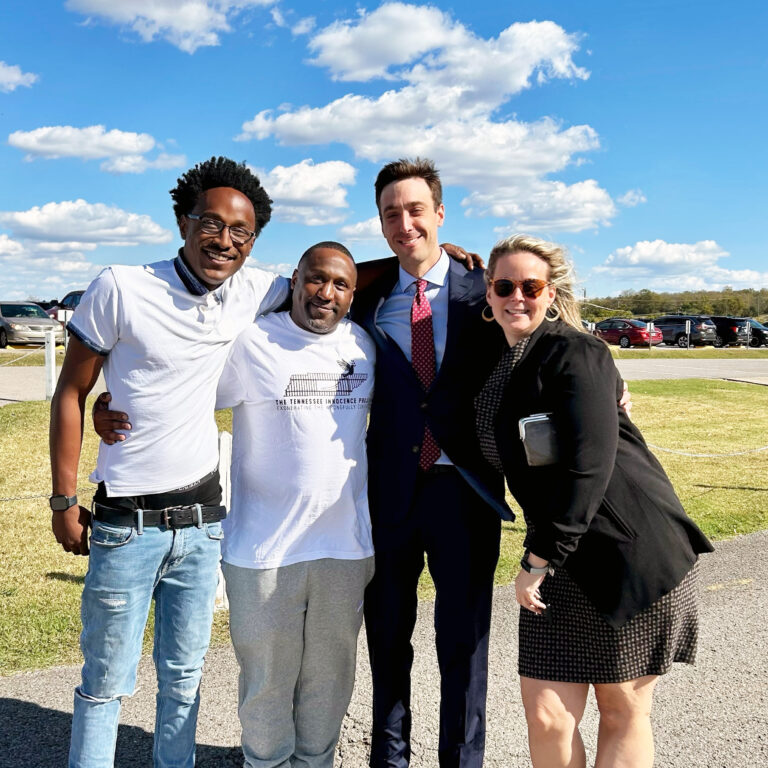
Image source: Source Name
The case: what happened
On the night of July 29, 2005, gunfire broke out at Kolor Koncepts, an auto body shop on Gallatin Pike in Madison. Kirk Clouatre was killed. His brother Kent and his wife Melissa were wounded. The shop had a reputation. One detective later described it as a place where “very little automotive work was being done and a lot of drug activity took place.” When police arrived, Melissa was flushing drugs down the toilet.
The two surviving witnesses gave contradictory accounts. Melissa said three or four men arrived, spoke with the brothers near the trunk of a Monte Carlo with a likely stolen license plate, and that the shooting started as Kirk walked away. Kent said he was outside picking up trash when the men simply started shooting, and that he stayed by his brother’s side the entire time.
Nearly a month after the shooting, a detective placed Thomas in a photo lineup, based largely on hearing that someone nicknamed “T” worked near the shop. Kent Clouatre, white, identifying a Black man, under significant trauma, nearly four weeks after the fact, picked Thomas from the lineup. That single identification became the entire basis for Thomas’s arrest.
Melissa Clouatre looked at the same lineup and picked a completely different person. The detective marked her result as “no identification” on the official form. Video of the lineup procedure, which surfaced in 2014, revealed the truth, and showed that Kent appeared to have viewed the photos before the recording was even turned on.
Thomas had an alibi. His then-wife, Royleesha Mason, was on bedrest after a high-risk pregnancy and could testify he was home all night. But his defense attorney failed to file the required advance notice of an alibi witness. The judge instructed the jury to disregard her testimony entirely. A neighbor, Shakisha Thompson, did testify that she dropped off Mason’s son and was calmly greeted by Thomas at the door, wearing his “grandpa slippers”, during the window the state claimed the shooting took place. The prosecution argued Thomas had just enough time to commit a murder ten miles away and make it home. The defense never told the jury the drive would take fifteen minutes each way.
On the evidence before them, which amounted to one eyewitness identification, with the contradicting identification hidden from view, and no alibi, the jury convicted Thomas Clardy of first-degree murder in 2007. He was sentenced to life in prison.
Mr. Clardy has lost years of his life serving a prison sentence for a crime he did not commit. We believe in Mr. Clardy's innocence, and we will continue to fight for his innocence and freedom.

Jessica Van Dyke Legal Director & Co-Founder
Problems with the conviction
The ballistics evidence alone should have changed everything. In 2016, eleven years after the crime, testing revealed that two of the three guns used in the shooting, a 9mm and a .40 caliber, had been used in other crimes after the Kolor Koncepts shooting but before Thomas’s trial.
The 9mm was used in a January 2006 homicide by a man with no connection to Thomas Clardy. The .40 caliber, the weapon Kent alleged Thomas used to kill Kirk, was found in the possession of that man’s cousin. Kent had initially described the shooter as having tattoos and gold teeth with diamond cut-outs. The owner of the .40 caliber has those specific features. Thomas Clardy does not. The Tennessee Court of Criminal Appeals later acknowledged this evidence was “certainly exculpatory.” It was never presented to the jury.
The detective who built the case against Thomas, concealed Melissa Clouatre’s contradictory lineup identification. Color photographs taken at the scene showed a blood trail proving Kent had run away from the garage, in the opposite direction from the perpetrators, directly contradicting his sworn testimony that he stayed beside his brother and could therefore reliably identify the shooter. Those color photographs were never shown to the jury, which saw only black-and-white versions in which the blood trail was not visible.
Thomas’s original trial attorney failed him at nearly every turn: no alibi notice, no eyewitness identification expert, no timeline evidence establishing the physical impossibility of the state’s theory, and no investigation into the alternative suspects the ballistics would eventually reveal.
Image Credit: Shannon Fontaine, Fontaine Creative
TIP’s involvement
Tennessee Innocence Project has been working to exonerate Thomas Clardy for nine years. TIP is proud to work alongside attorneys from Bass, Berry & Sims, specifically, Scott Gallisdorfer, who has worked tirelessly on the case since 2019.
In June 2023, federal district Judge Aleta Trauger overturned Thomas’s conviction, finding that his original attorney’s failure to present expert testimony on the well-documented limitations of eyewitness identification, particularly cross-racial identification, constituted ineffective assistance of counsel in violation of his constitutional rights. Thomas walked out of Riverbend on October 20, 2023.
The Tennessee Attorney General’s Office appealed. In 2024, the U.S. Court of Appeals for the Sixth Circuit reversed Judge Trauger’s ruling. The U.S. Supreme Court declined to hear the case. Thomas was sent back to Riverbend.
In February 2026, Thomas appeared before the Tennessee Board of Parole seeking clemency. Dozens of community members, colleagues, neighbors, and family members testified on his behalf. His fiancée Keondra Cooper, whose daughter Kierra testified in tears, spoke about the man they need back home. Three board members voted to recommend exoneration to the Governor. The final decision rests with Governor Bill Lee.
TIP continues to fight for Thomas’s full exoneration.
See more active cases
Links & Resources
We are fighting every day to correct these injustices
—but we can’t do it alone.